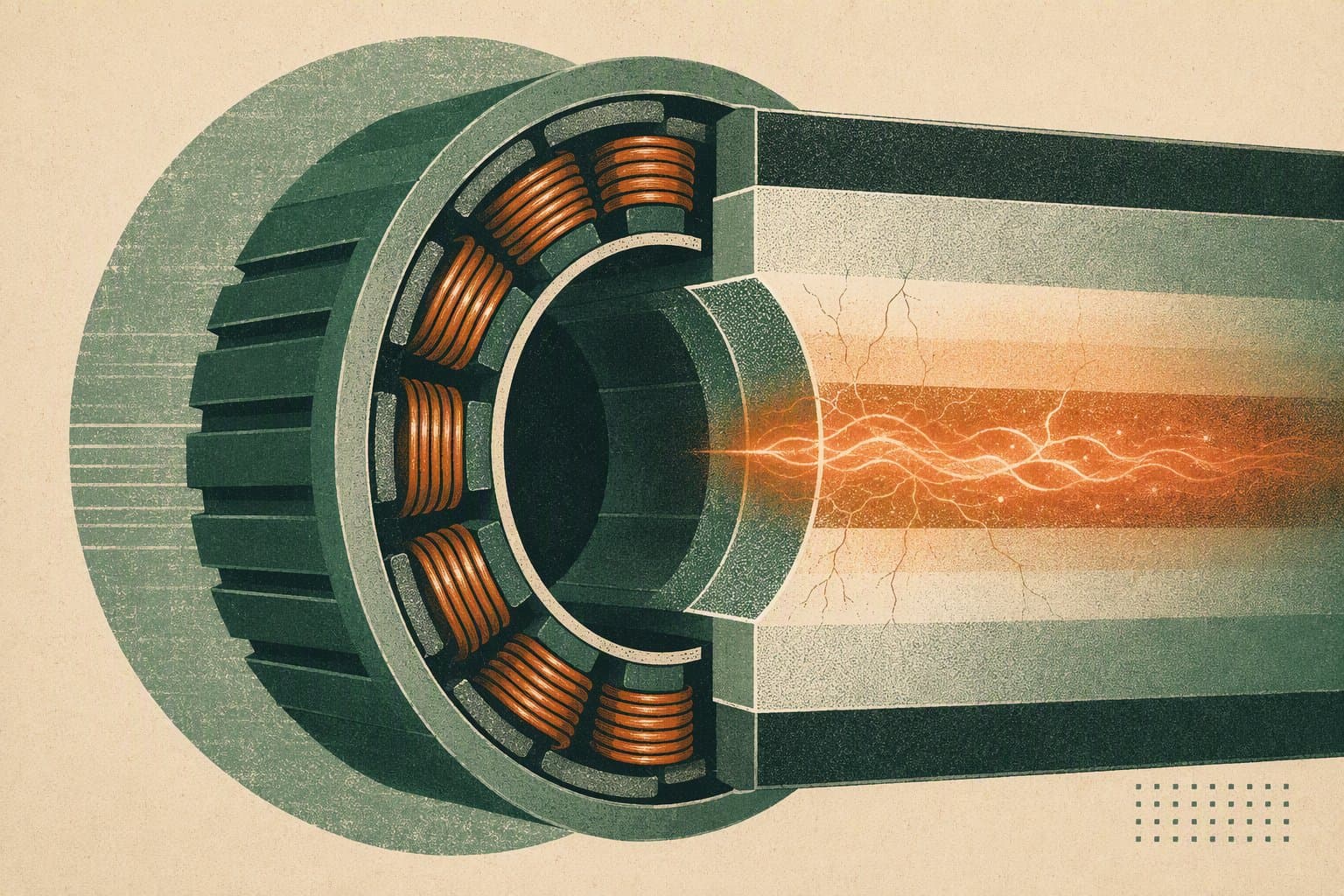
CFM International announced new progress on its RISE program during the Farnborough International Airshow, marking significant steps toward flight test demonstrations planned for this decade. The company highlighted the completion of preliminary design reviews for the Open Fan and compact core modules, which are central to its next-generation aircraft propulsion efforts.
Over the past five years, the program has conducted approximately 500 test campaigns focusing on advanced engine architectures. These efforts include the Open Fan design, which eliminates the traditional engine casing to allow for a larger fan and reduced drag. The goal is to improve both durability and fuel efficiency while maintaining the performance levels of current turbofan engines.
Gaël Méheust, president and CEO of CFM International, stated that engineers are maturing advanced technologies while balancing innovation with the company's extensive experience in the single-aisle market. He emphasized the importance of durability and maintainability alongside efficiency for customer operations.
Testing of Open Fan components, including blades and Outlet Guide Vanes, is currently underway. These tests cover impact, ingestion, fatigue, and vibration response. Early results from wind tunnel facilities indicate that aeroacoustics performance has surpassed initial technology maturation objectives. The program is also leveraging composite turbofan blade technology and turboprop expertise to optimize designs for acoustics and aerodynamics.
Durability testing is being conducted earlier in the development cycle than usual. More than 2,000 cycles of dust ingestion tests have been completed to evaluate high-pressure turbine airfoil technologies. A second test using a more product-representative LEAP-1B engine is also providing data on how these technologies might perform in real-world conditions.
Arjan Hegeman, vice president of future of flight engineering for GE Aerospace, noted that the technologies within the new architecture have been proven over decades of innovation. He described the testing of real, full-size Open Fan hardware as evidence of renewed ambition to deliver vital technology step-changes for the future of air travel.